Hybrid Application A hybrid app combines elements of both native and web applications. Hybrid apps can be distributed through the app stores just like a native app, and they can incorporate operating system features. As a web app, hybrid apps can also use cross-compatible
Hybrid Application
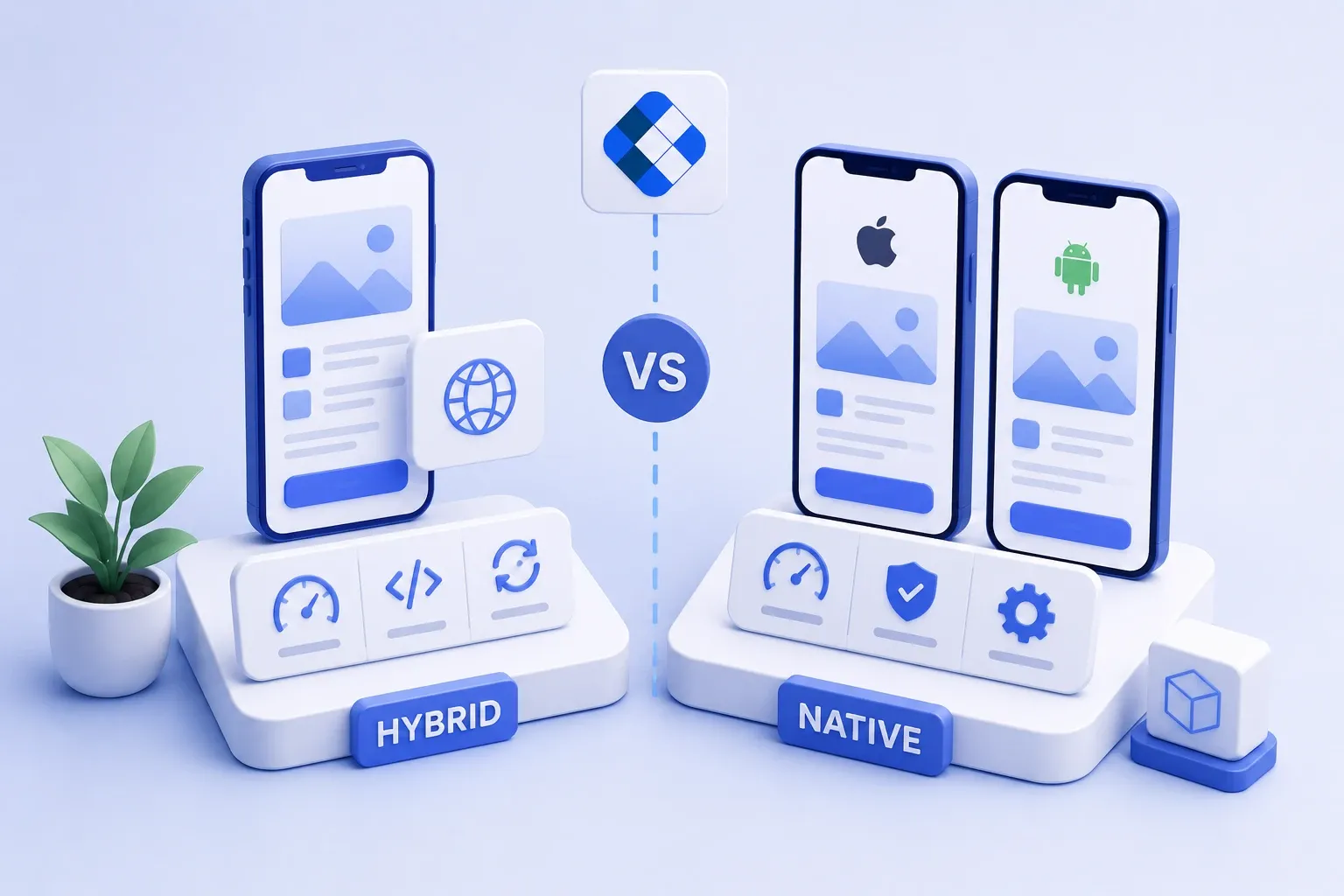
A hybrid app combines elements of both native and web applications. Hybrid apps can be distributed through the app stores just like a native app, and they can incorporate operating system features. As a web app, hybrid apps can also use cross-compatible web-related technologies.
Hybrid apps are typically easier and faster to develop than native apps. They also require less maintenance. On the other hand, the speed of your hybrid app will depend completely on the speed of the user’s browser. This means hybrid apps will almost never run as fast as a native app runs.
The advantage of hybrid apps is that you can build them on a single base, which allows you to add new functionalities to multiple versions of your app. With native apps, you will need to replicate every new feature you want to introduce for each platform.
Native Application
Native development comes with its own set of challenges that other platforms, like the Web, largely don’t have to deal with. For starters, you need different engineering talents to execute on iOS and Android platforms respectively, often resulting in multiple disjointed technology stacks. This creates additional overhead because you need to ensure consistency between both platforms.
Additionally, native development has a slow development cycle. When building on the Web, if a developer makes a change and wants to test the results, he simply saves the file and reloads the browser. However, a native developer has to recompile the project to view even the smallest of changes. This results in a slow cycle, especially on larger projects where compile time is significant.
One of the hardest decisions to make when starting a new app is which platforms to target. A mobile app gives you more control and better performance but isn’t as universal as the web.
John GilbertSoftware Engineer - Trainee