A customer loyalty program should do more than hand out discounts. For a retailer, the real goal is to give customers a compelling reason to return while building a clearer view of how they shop.
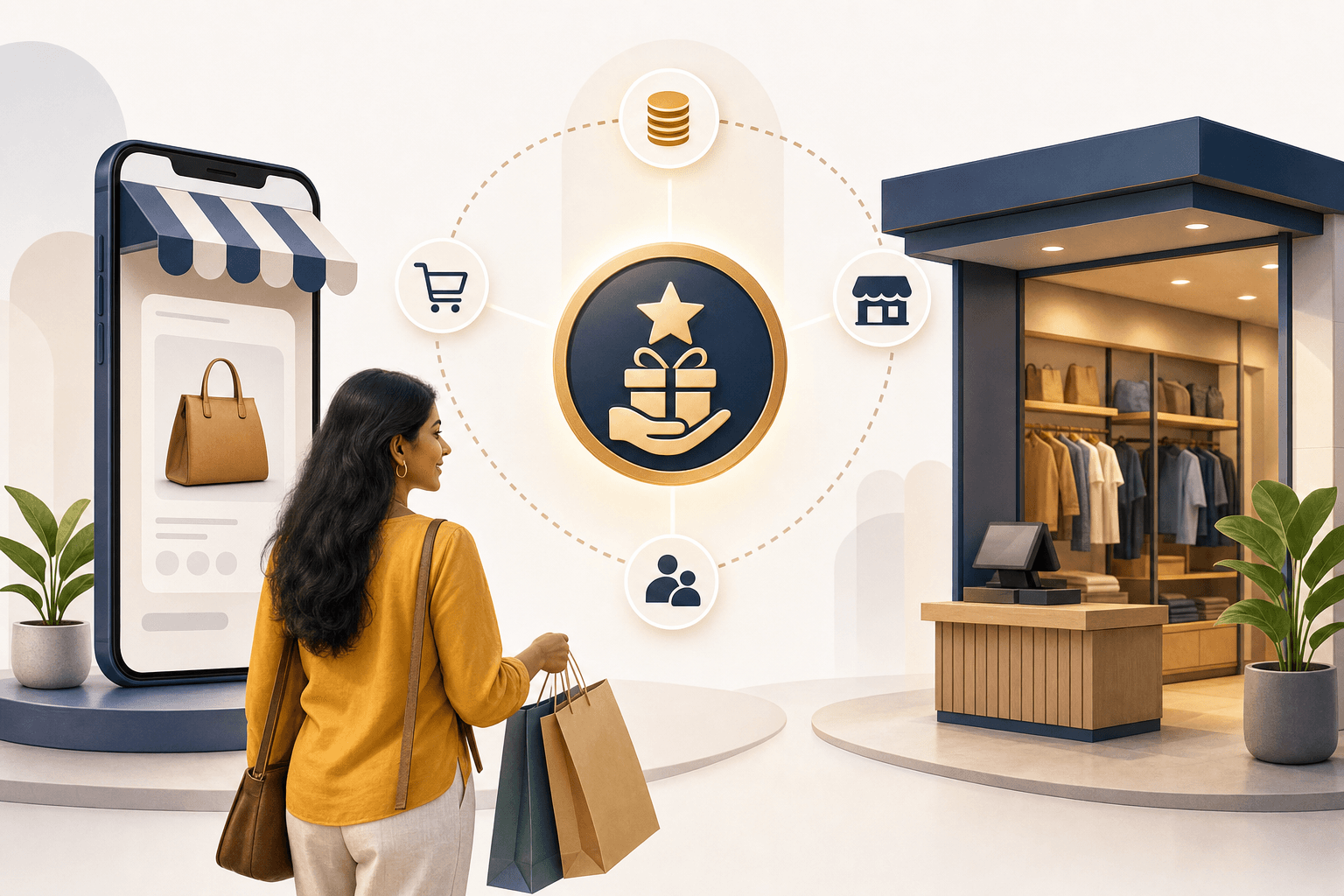
That sounds straightforward until customers move between channels. Someone may discover a product on social media, buy it through a Shopify store, visit a physical outlet for the next purchase, and expect the same points and benefits everywhere. If the online store, point-of-sale system, and loyalty database do not share data, the experience breaks down quickly.
This guide explains how Sri Lankan retailers can design a customer loyalty program that is simple for customers, commercially sustainable, and connected across online and in-store channels.
What Is a Customer Loyalty Program?
A customer loyalty program is a structured rewards system that encourages customers to make repeat purchases or take other valuable actions. Members may earn points, move through tiers, receive exclusive benefits, or unlock rewards based on their spending and engagement.
The strongest programs create a fair exchange:
- customers receive useful, easy-to-understand benefits;
- the retailer increases repeat purchase opportunities;
- both sides get a more consistent experience across channels.
A loyalty program is not the same as running frequent promotions. Promotions can create a short sales lift, but they often end when the discount ends. A loyalty program gives customers a continuing reason to identify themselves, return, and engage with the brand.
Why Retail Loyalty Programs Often Underperform
Many programs launch with enthusiasm and then become expensive discount systems. The problem is rarely the absence of points. It is usually weak program design or disconnected technology.
The rewards are not valuable enough
Customers will not change their behaviour for a benefit they do not understand or value. A complicated conversion rate, a reward that takes too long to earn, or benefits that are hard to redeem can make membership feel pointless.
The rules are difficult to understand
A customer should be able to answer three questions immediately:
- How do I earn?
- What can I redeem?
- Where can I use my rewards?
If the answers require a long explanation, the program is too complicated.
Online and in-store balances are separate
A customer who earns points online expects to use them in a store, and vice versa. Separate balances create confusion for customers and manual work for staff. They also prevent the retailer from understanding the customer's full relationship with the brand.
The program is driven by discounts alone
Constant percentage discounts can reduce margin without creating meaningful loyalty. Strong programs use a broader reward mix, such as early access, free delivery, member-only products, birthday benefits, priority service, referrals, and experiences.
The retailer cannot measure the result
Membership numbers alone do not show whether a program is working. A large database can still produce little commercial value if members are inactive or if rewards subsidise purchases that would have happened anyway.
Choose the Right Customer Loyalty Program Model
There is no universal model. The right structure depends on purchase frequency, average order value, product category, margin, and customer motivation.
Points-based loyalty program
Customers earn points for purchases or selected actions and redeem them for rewards. This model is familiar and flexible, making it useful for retailers with regular purchase cycles.
Keep the earning rule simple. Customers should not need a calculator to understand the value of their points.
Tiered loyalty program
Members move through levels based on spending or activity. Higher tiers unlock better benefits. This can work well for brands that want to recognise their highest-value customers and create a sense of progress.
Tiers should offer meaningful differences. Changing the tier name without improving the benefit will not motivate customers.
Spend-based rewards
Benefits are based directly on the amount spent. This can be easier to manage than a complex points system, particularly when products have predictable margins.
Retailers should still set clear boundaries so rewards remain commercially sustainable.
Referral loyalty program
Existing customers receive a benefit when they introduce a new customer who completes a qualifying action. Referral rewards can support acquisition as well as retention, but both the qualification rule and the reward timing must be transparent.
Paid or subscription membership
Customers pay a recurring or one-time fee in exchange for benefits such as delivery, preferred pricing, or priority access. This model works only when the ongoing value is obvious and exceeds the membership cost for the target customer.
Hybrid program
Many retailers combine points, tiers, and referrals. A hybrid model can be powerful, but every additional rule increases operational and technical complexity. Start with the smallest model that supports the business goal, then expand based on evidence.
How to Build a Customer Loyalty Program
A successful launch starts with business design, not software selection.
1. Define the behaviour you want to change
Choose one or two primary outcomes. Examples include:
- increasing repeat purchase frequency;
- increasing average order value;
- moving more customers from guest checkout to identified membership;
- encouraging customers to shop both online and in-store;
- generating qualified referrals;
- improving retention in a specific customer segment.
A program built around every possible objective will be difficult to manage and measure.
2. Establish a financial model
Decide what a point or benefit costs the business. Model the expected earning rate, redemption rate, reward cost, and margin impact before launch.
Include operational costs as well as rewards. The budget may need to cover platform fees, integrations, customer communication, staff training, support, and ongoing campaign management.
3. Understand the customer segments
Different customers value different benefits. Frequent buyers may respond to status and early access, while occasional buyers may prefer a clear reward they can reach quickly.
Use available transaction data, customer feedback, and store-team insight to identify:
- how often customers buy;
- which channels they use;
- what categories they purchase;
- which benefits they already value;
- where friction occurs in the current journey.
This prevents the program from being designed around internal assumptions.
4. Design simple earning and redemption rules
Customers should see progress quickly, but rewards should still support profitable behaviour. Define qualifying purchases, exclusions, expiry rules, returns handling, and the conditions for referrals or bonus campaigns.
Write the rules in plain language. Store staff, customer-service teams, and customers should all interpret them the same way.
5. Plan one customer identity across channels
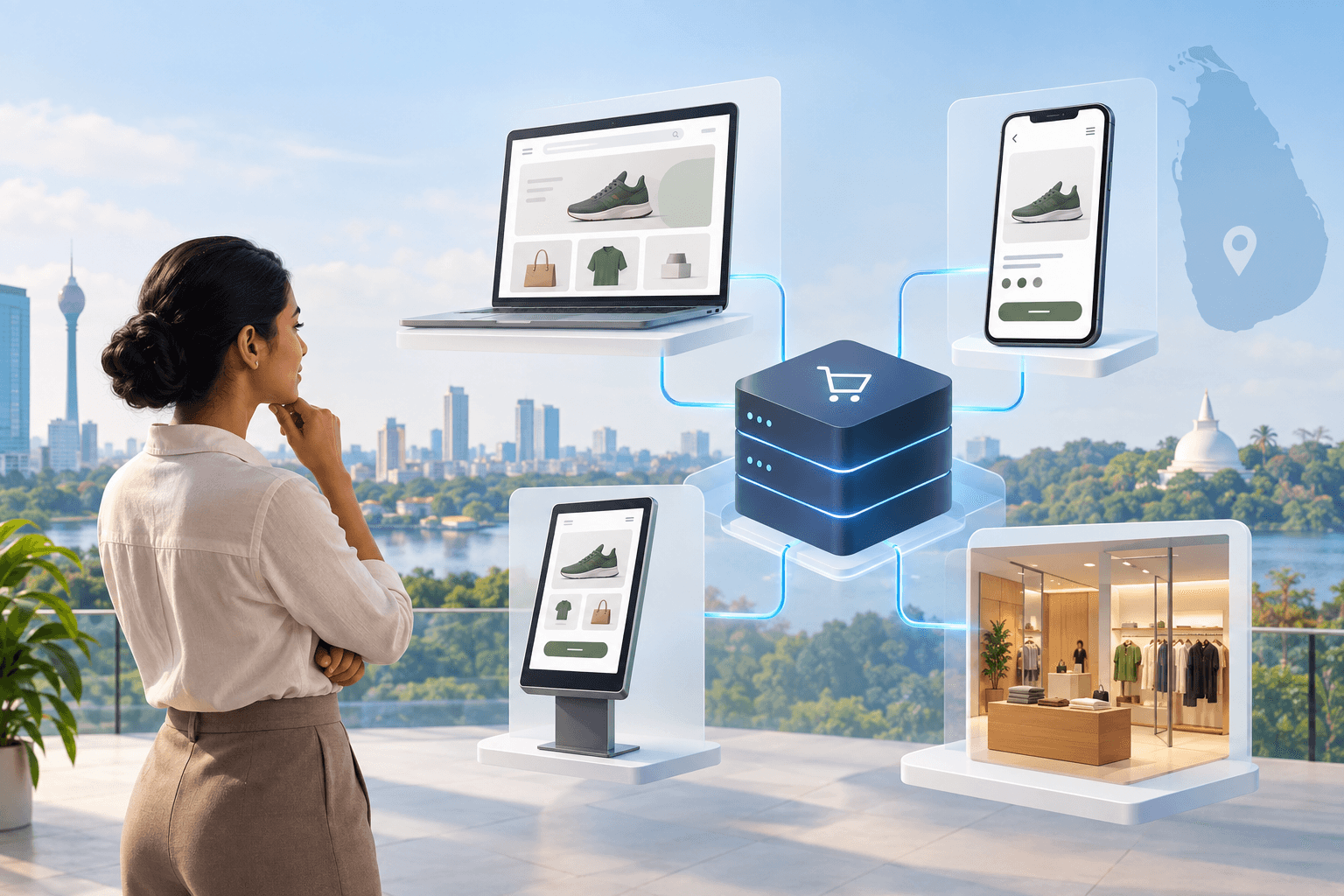
This is the foundation of an omnichannel loyalty program. The system needs a reliable way to recognise the same person online, at the POS, and in a mobile experience.
For many Sri Lankan retailers, a verified phone number is practical because it can be used at checkout and in-store. Whatever identifier is chosen, the process should minimise duplicate profiles and give customers a clear way to access their balance and history.
6. Connect the loyalty program to Shopify and the POS
A Shopify loyalty program should not operate as an isolated storefront plugin when the retailer also has physical outlets. The website, POS, and loyalty system need agreed data flows for members, transactions, points, coupons, returns, and redemptions.
Define the source of truth for each data type. For example:
- which system owns the customer profile;
- where points are calculated;
- how an online coupon is validated in-store;
- what happens to points when an order is cancelled or returned;
- how delayed or failed synchronisation is reconciled.
Konekt's retail digital transformation solutions connect loyalty, e-commerce, POS, delivery, and automation so retailers can manage one customer relationship across channels.
7. Train store and support teams
A technically sound program can still fail at the counter. Staff need to know how to register a member, find an account, explain benefits, resolve a missing transaction, and handle a return involving points.
Create short operational guides and clear escalation paths. Test the most common edge cases before inviting customers to join.
8. Launch in a controlled phase
A pilot with selected stores, customer groups, or product categories can expose problems before a full rollout. Monitor registration, transaction matching, reward calculations, redemption, staff feedback, and support requests.
Use the pilot to simplify unclear rules and fix integration issues. A stable experience is more important than launching every planned feature at once.
What an Omnichannel Loyalty Platform Needs
Retailers evaluating loyalty program software should look beyond the member-facing screen. The operational capabilities determine whether the program can scale.
Unified member profiles
Online and in-store activity should connect to one profile. Staff should not have to create a new record because a customer used a different channel.
Real-time or near-real-time points
Customers need confidence that their balance is accurate. If synchronisation is delayed, the customer experience and the reconciliation process must be clearly defined.
Cross-channel earning and redemption
A member should be able to earn on Shopify and redeem at the POS when the program promises omnichannel access. Channel restrictions should be intentional, not the result of disconnected systems.
Tier and campaign controls
The platform should support tier qualification, bonus-point campaigns, referrals, coupons, and eligibility rules without requiring a custom development project for every promotion.
Returns and reversal handling
Points earned from a returned order may need to be reversed. Rewards used on a returned purchase also need a defined treatment. This logic should be auditable.
Audit trail and permissions
Every point movement, manual adjustment, and coupon issue should be traceable. Role-based permissions help prevent unauthorised changes and make exceptions easier to investigate.
Integration monitoring
Connections can fail. The platform should make failed transactions visible, retry when appropriate, and provide an operational path for reconciliation.
How to Measure Customer Loyalty Program Performance
Measure the program against the business objective defined at the start. Useful metrics include:
- active member rate;
- enrolment rate;
- repeat purchase rate;
- purchase frequency;
- average order value for members and comparable non-members;
- redemption rate;
- reward cost as a percentage of member revenue;
- cross-channel member activity;
- referral conversion rate;
- points issued, redeemed, expired, and adjusted;
- incremental margin after reward and operating costs.
Compare like with like. Members are often already more engaged than non-members, so a simple revenue comparison can exaggerate the program's effect. Track cohorts over time and compare behaviour before and after membership where the data allows.
Review customer experience alongside commercial performance. Missing points, failed coupons, duplicate profiles, and confusing expiry rules can damage trust even when the headline sales numbers look positive.
A Practical Launch Checklist
Before going live, confirm that:
- the program has a specific commercial objective;
- earning and redemption rules are easy to explain;
- reward costs and points liability have been modelled;
- customer consent and data handling are clearly addressed;
- Shopify, POS, and mobile channels use one member identity;
- purchases, returns, and cancellations update points correctly;
- staff can register members and resolve common issues;
- customers can see their balance and available rewards;
- integration failures are monitored;
- launch metrics and review dates are agreed.
Build Loyalty Around the Customer, Not the Channel
A good customer loyalty program feels simple to the member even when several systems support it behind the scenes. Customers should not have to understand which database, store platform, or POS issued their points. They should recognise one brand, one membership, and one reliable balance.
That is the real opportunity for Sri Lankan retailers. Instead of adding another disconnected rewards app, they can create a loyalty layer that connects the full shopping journey.
Konekt has delivered connected retail experiences that bring Shopify, delivery, and loyalty together, including its e-commerce implementation for Thilakawardhana. For retailers planning a new program or replacing fragmented loyalty tools, Konekt can assess the current stack, map the integration requirements, and design a practical rollout.
Book a consultation with Konekt to plan a customer loyalty program that works across your online store, physical outlets, and mobile customer experience.